
About F3A
What Is F3A?
Precision aerobatics. Purpose-built aircraft. A judged sequence where every detail counts.
The Short Version
F3A is the FAI class for radio-controlled precision aerobatics. Pilots stand on the ground and fly a sequence of required maneuvers in front of judges. The goal is not simply to complete each figure. It is to fly it with exact geometry, consistent speed, correct positioning, smooth control, and as few visible errors as possible.
Why It Is So Difficult
The airplane is constantly affected by wind, perspective, distance, and changing conditions. The pilot must correct for all of it while making the flight appear deliberate and precise. At the World Championship level, the top pilots are separated by very small differences in execution.
The Aircraft
F3A airplanes are highly specialized competition models. Current FAI rules limit overall span and length to 2 meters. Modern designs are optimized for predictable geometry, controlled speed, smooth tracking, and the ability to maintain shape through demanding aerobatic figures.
The Scoring
Each maneuver is scored independently by a panel of judges. The judges evaluate how closely the maneuver matches the required geometry and presentation. More difficult maneuvers carry a higher difficulty factor, and visible errors reduce the score.
Team and Individual Competition
The World Championship produces both an individual champion and a national team champion. That means every pilot is competing for an individual result while also contributing to the performance of Team USA.
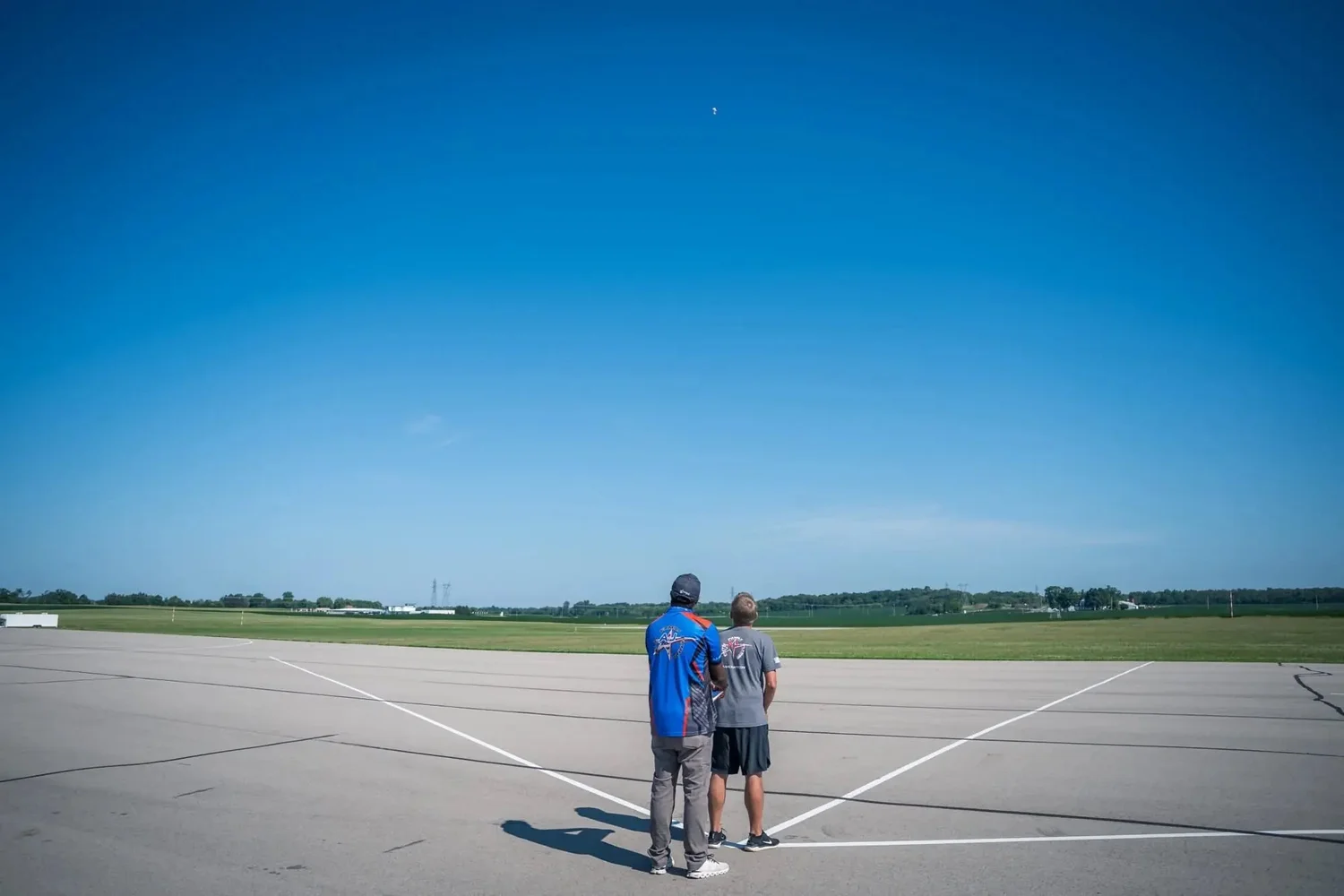
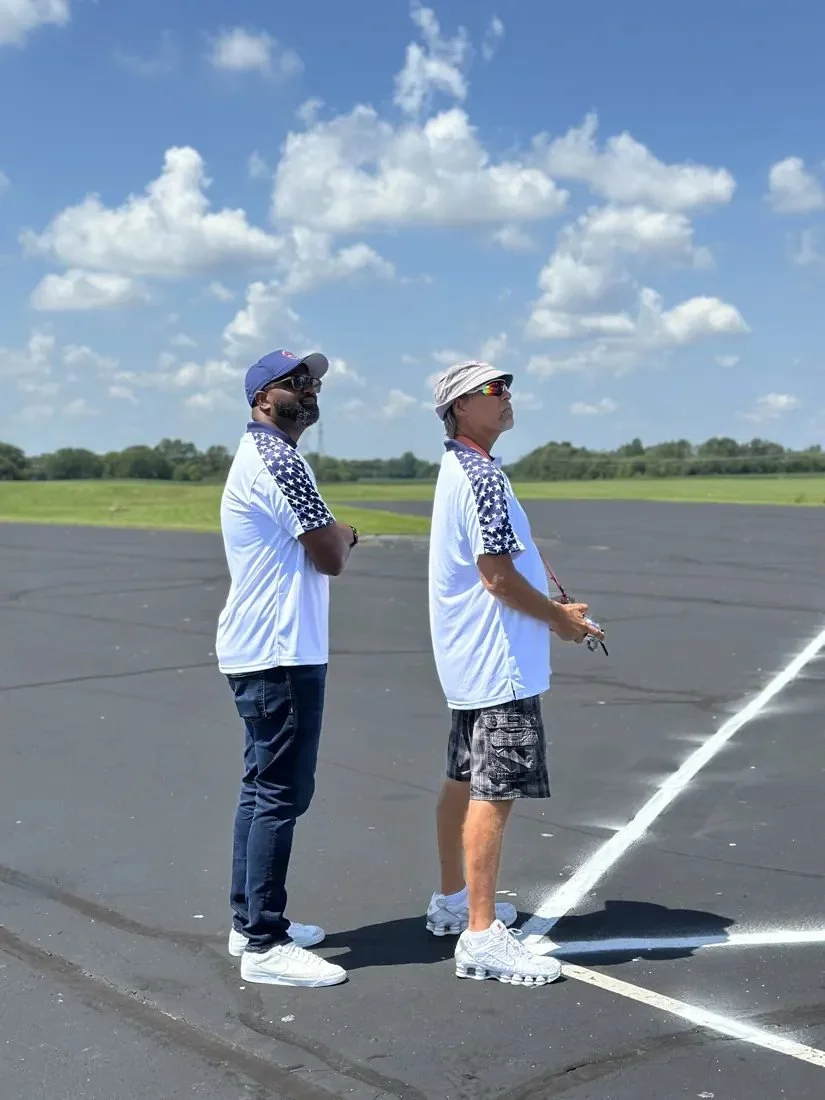
What Does a Caller Do?
The Voice Beside the Pilot
A World Championship flight is a memorized sequence flown with total concentration on the airplane. The caller stands right beside the pilot and keeps the flight on script.
- Tracks the sequence. The caller knows exactly which maneuver is next and calls it before the pilot needs it.
- Cues the setup. A quick heads-up on the next figure lets the pilot position the airplane early instead of reacting late.
- Keeps the pilot ahead of the flight. With the order handled, the pilot's full attention stays on geometry, wind correction, and placement.
For 2027, Chuck Hochhalter calls for AC Glenn. Their rhythm is built over hundreds of practice flights before Korea.
World Championship History
More Than 65 Years of F3A World Championships
The first F3A World Championship was held in Switzerland in 1960. Since then, the championship has moved around the world and helped shape generations of pilots, aircraft, radio systems, judging standards, and aerobatic design. Team USA's 2027 campaign is the newest chapter in a competition history shared by teams from Europe, Asia, Africa, Australia, and the Americas.
The first World Championship. Ed Kazmirski of the USA wins the individual title.
Phil Kraft wins for the USA, part of an early run of American titles.
Hanno Prettner of Austria wins the first of his seven world titles.
Giichi Naruke wins at home, then repeats in 1997.
Christophe Paysant-Le Roux of France begins a record-setting era of individual titles.
Tetsuo Onda of Japan takes the individual title.
Lassi Nurila of Finland wins the individual world championship.
Andrew Jesky wins the individual title and Team USA wins the team championship.